
Best Product-Led Marketing
Uncategorized

The Quiet Confidence of Not Explaining: Why Some Brands Let the Product Speak

Top Product-Led Marketing Tactics: Let the Product Do the Talking In today’s competitive marketplace, companies frequently feel compelled to explain every feature, justify each price, and communicate every benefit in exhaustive detail. However, an increasing number of brands are realizing that effective marketing doesn’t always demand constant explanation. 3. Through product-led marketing, companies let the quality, functionality, and overall user experience convey value organically. How Product-Led Marketing Cultivates Customer Trust This approach conveys a quiet confidence. Rather than bombarding customers with lengthy explanations and pushy sales tactics, product-led marketing emphasizes crafting an experience that lets customers discover the product’s value on their own. When a product fulfills its promise, that experience becomes part of the marketing. In this article, we look at how product-led marketing enables brands to foster trust, deliver more meaningful customer experiences, and convey value in a simpler way. We’ll also explore how companies can implement this principle in their marketing strategies while preserving their distinctive brand voice. Confidence Without Grounding in Psychology To grasp why silence can be so compelling, it’s essential to explore how consumers perceive confidence. 17. When a brand avoids over-explaining its value, it subtly conveys confidence. 7. Consumers frequently see this restraint as a sign of quality, because they link excessive justification to insecurity or desperation. Therefore, a brand that speaks less often seems to have more to offer. In addition, this psychological pattern reflects a wider human inclination to favor confidence over argumentation. People tend to be more attracted to individuals and brands that exude confidence in their value, rather than those perpetually chasing approval. As a result, when a company lets its product speak for itself without extensive explanation, it quietly conveys that the product’s value is obvious, thereby reinforcing consumer trust. Why Too Much Explanation Can Hurt a Brand Despite good intentions, over-explaining frequently has unintended negative consequences. When marketing copy tries to justify every part of a product, it may unintentionally imply that the product needs defending. 17. As a result, consumers might start to doubt whether the product truly fulfills its claims, given the considerable effort that has been put into persuading them otherwise. In addition, over-explaining often inundates potential customers with irrelevant details, complicating rather than simplifying their decision-making. 12. Rather than streamlining the purchasing process, too much detail can lead to confusion and delay. Therefore, brands that avoid the need to explain everything often see their audience respond with greater clarity and confidence in their purchasing decisions. The Part Design Plays in Nonverbal Communication Design is essential for allowing brands to convey messages without using words. Clean, minimalist packaging, uncluttered websites, and straightforward visual identities often communicate sophistication and quality more powerfully than lengthy descriptions ever can. Moreover, well-considered design choices enable the product to serve as its own main storyteller, reducing the need for lengthy verbal explanations. Moreover, this design-focused method closely matches current consumer tastes, especially among those who prioritize simplicity and authenticity over forceful marketing. When a product’s design conveys quality immediately, customers tend to form favorable impressions right away. As a result, brands that heavily invest in design tend to rely less on extensive marketing copy, letting visual and sensory elements take on the persuasive role instead. Let Product Experience Take the Place of Persuasive Copy Beyond its design, how a product feels to use is often the most persuasive marketing tool available. Brands that focus on outstanding functionality and ease of use often discover that happy customers become their strongest advocates. Instead of depending on marketing claims, these companies let users’ direct experiences confirm the value they offer. As a result, this experience-based approach fosters a natural cycle of trust. Customers who truly enjoy a product rarely need further persuasion and frequently become passionate advocates among their peers. Thus, companies that prioritize product quality over persuasive advertising frequently gain organic advocacy that conventional ads cannot match. Brand Case Studies Where Products Take Center Stage Several widely recognized companies embody this philosophy of limited communication. For example, some technology brands have established themselves through minimalist marketing, favoring elegant product showcases over detailed technical descriptions. In a similar way, certain fashion and lifestyle brands depend almost entirely on visual storytelling, using imagery to communicate quality and aspiration without needing much written explanation. In addition, luxury car brands often apply this same approach, showcasing their vehicles via compelling imagery and sparse text instead of lengthy technical specifications. These examples show that in various industries, letting the product speak for itself can produce a stronger and more lasting brand impression than any detailed explanation ever could. Silence Balanced With Essential Information Though quiet confidence provides notable benefits, it does n’t mean companies should completely withhold crucial information. Customers still need fundamental information to make informed decisions, including pricing, functionality, and real-world applications. Thus, brands need to strike a careful balance between restraint and transparency to prevent customers from feeling confused or left out of the information. While quiet confidence offers significant advantages, it doesn’t imply that companies should entirely keep vital information hidden. Customers still require essential details to make well-informed decisions, such as pricing, functionality, and practical uses. Therefore, brands must carefully balance restraint with transparency to avoid confusing customers or making them feel excluded from important information. The Dangers of Embracing a Minimalist Marketing Strategy Although it offers potential advantages, quiet confidence comes with specific risks that companies need to weigh carefully. For instance, newer or less familiar brands may find it difficult to establish initial trust without adequate explanation, as consumers typically need context before identifying true quality. Lacking a proven reputation or broad recognition, overly cautious approaches may leave potential customers doubtful instead of captivated. Moreover, this method requires outstanding product quality, as there is minimal marketing language to offset any deficiencies. If the product doesn’t live up to expectations, lacking a convincing explanation does nothing to ease the resulting disappointment. Thus, companies contemplating this strategy should verify that their offering can truly endure with little to no marketing

Pain point marketing
Uncategorized

Selling the Problem, Not the Product: Why Pain Points Convert Better Than Features

Introduction: Moving the Focus From Features to Frustrations For decades, businesses have crafted marketing campaigns focusing on product specifications, technical attributes, and innovative functionalities. However, pain point marketing differs by prioritizing the frustrations, challenges, and issues customers aim to resolve. Rather than beginning with the product’s features, this approach starts by exploring why customers require a solution at all. Pain point marketing acknowledges that customers are typically more focused on finding solutions to their problems than on being informed about a product’s features. By pinpointing and resolving particular customer frustrations, brands can tailor their messaging to be more relevant, relatable, and compelling. Rather than just listing features, businesses link their products to actual problems people face and show how their solutions can simplify the customer’s daily life. The Psychology Behind Pain Point Marketing Understanding why this method works so well requires first grasping the psychological processes at play. People are naturally more driven to avoid pain than to seek pleasure, a tendency referred to as loss aversion. Therefore, marketing messages that address a problem the customer is currently experiencing tend to trigger a stronger emotional response than those that simply list potential benefits. Thus, marketing messages that focus on a problem the customer is currently facing tend to evoke a more intense emotional reaction than those that merely outline possible benefits. Moreover, pain points generate urgency. When a customer sees their own frustration mirrored in a brand’s messaging, they feel acknowledged, and that feeling of being understood quickly fosters trust. Thus, the customer is more receptive to considering a solution, since the marketing efforts have already validated their experience before they make a purchase decision. Why Features Alone Do n’t Convince Although it may be tempting to highlight every technical detail, feature-driven marketing often fails in real-world application. Many consumers, especially those not comfortable with technical terms, find it difficult to turn a list of features into real-life advantages for themselves. Consequently, an impressive array of features might confuse potential customers rather than persuade them. Moreover, feature-focused messaging often encourages direct comparisons with competitors, narrowing the discussion to a contest of specifications instead of emphasizing value. This dynamic frequently results in competition based on price, as customers who judge products only by their features tend to choose the option that provides the most value at the lowest cost. In contrast, when marketing focuses on the problem being addressed, the comparison moves toward outcomes and experiencesareas where differentiation is much easier to achieve. Recognizing Real Customer Pain Points Before developing messaging centered on problems, companies need to dedicate time to truly grasp their audience’s frustrations. This process usually starts with direct customer research, such as surveys, interviews, and detailed examination of customer service interactions. Via these channels, companies can identify persistent complaints and unfulfilled needs that might otherwise go unnoticed. In addition, social media platforms and online reviews provide valuable insight into raw customer sentiment. By monitoring these conversations, marketers can identify the natural language patterns customers use to convey their frustrations. Later, this genuine language can be used directly in marketing materials, producing messages that appear strikingly personal and tailored to the intended audience. Crafting Messaging That Speaks to Frustration After identifying genuine pain points, the next step is to convert that insight into persuasive messaging. Successful copy that prioritizes problem-solving usually begins by clearly stating the frustration, enabling the reader to instantly see their own situation reflected in the message. This acknowledgment establishes an immediate link before the product is even presented. Following this, the messaging should flow seamlessly into positioning the product as an obvious and intuitive solution to the problem previously outlined. Instead of presenting features separately, each capability should be described by the benefit or enhancement it delivers. Moreover, incorporating storytelling techniques can enhance this method, as narratives showing a customer resolving a particular frustration are often more memorable and compelling than plain feature explanations. Case Examples of Pain Point Marketing in Action Many successful brands have structured their entire marketing strategies around this problem-first approach. For example, many software companies promote their products by highlighting the inefficiency, frustration, or wasted time their tool removes, rather than emphasizing technical features alone. In a similar way, financial services firms frequently highlight concerns about managing money before presenting their particular tools or platforms. Moreover, consumer goods companies often employ this method by first showing common annoyanceslike messy rooms or tedious tasksbefore introducing their product as the simple solution. These examples show that no matter the industry, starting with the problem tends to be more effective than beginning with the technical advantages of the solution. How Emotional Language Influences Selling by Addressing Pain Points Emotional language is essential for enhancing the impact of problem-first marketing. Terms that trigger feelings of frustration, exhaustion, or anxiety often connect more powerfully than neutral or technical language. Thus, marketers ought to choose words that reflect the emotional depth of the customer’s real experience. Still, this method demands careful calibration, as too much negativity may drive away potential customers instead of convincing them. Therefore, effective messaging strikes a balance by recognizing the problem while also moving forward with optimism toward resolution. This balance helps customers feel heard without being overwhelmed by negativity, ultimately steering them toward a hopeful and practical next move. Common Mistakes When Implementing This Strategy Although problem-first marketing provides notable benefits, companies frequently commit serious mistakes when trying to put it into practice. A frequent error is inflating or inventing pain points that do n’t truly represent the target audience’s actual experiences. As a result, customers can easily spot fake messaging, which undermines credibility instead of fostering trust. Moreover, certain businesses struggle to move seamlessly from identifying a problem to presenting a solution, which can make their messaging seem unfinished or excessively negative. If the solution isn’t presented clearly and confidently, customers might become more aware of their frustration without being inspired to act. Thus, marketers need to make sure that all problem-focused content eventually guides the audience to a

best organic marketing strategies
Uncategorized

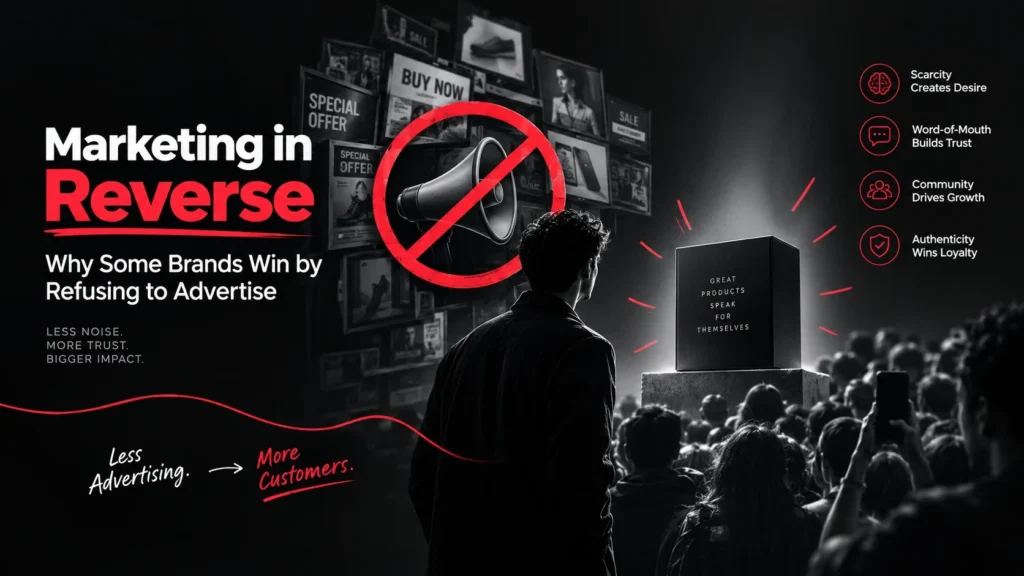
best Organic Marketing Strategies: Why Some Brands Win Without Traditional Advertising

Introduction: The Quiet Rebellion Against Traditional Advertising In a time when consumers are bombarded with ads on every digital platform, certain brands are choosing an alternative strategy to capture attention and drive demand. Instead of depending heavily on traditional advertising, they are shifting toward organic marketing strategies that emphasize word-of -mouth , genuine customer experiences, scarcity, and authentic brand relationships. This approach questions the traditional notion that ongoing paid advertising is necessary to achieve visibility and expand a business. Therefore, marketers are increasingly looking into how effective organic marketing strategies can build awareness without relying solely on traditional advertising campaigns. Why do some brands attract a lot of attention without constantly advertising themselves? And why might customers be more drawn to a brand that refrains from pushy sales tactics? This article examines how organic marketing strategies enable businesses to establish credibility, spark authentic interest, and foster enduring demand by adopting a more natural approach to promotion. The Psychology of Scarcity and Restraint To grasp why silence can be more effective than noise, one needs to first explore the psychological concept of scarcity. When something is hard to get, people tend to value it more. Brands that restrict their visibility send an unspoken message that they don’t need to pursue customers, prompting those customers to seek them out instead. Additionally, restraint conveys confidence. A company that shies away from aggressive advertising implies its product needs no loud promotionits quality speaks for itself. As a result, consumers start to link the brand with quality and exclusivity instead of desperation. This psychological shift turns customers from passive recipients of marketing messages into active seekers of the product, thereby fundamentally reversing the power balance between brand and buyer. Word-of-Mouth as the New Advertising Currency Traditional advertising delivers messages to large audiences, whereas word-of-mouth relies on trust between individuals. As a result, brands that avoid advertising typically pour significant resources into crafting experiences that are worth discussing. Rather than buying ad space, they emphasize product quality, outstanding customer service, and unexpected experiences that organically spark conversation. In addition, word-of-mouth carries a credibility that paid advertisements simply cannot replicate. When a friend or family member suggests a product, the recommendation comes across as genuine and impartial. Thus, brands that foster real enthusiasm among their current customers successfully turn those customers into a free, highly trusted sales network. Although this organic growth method takes longer to develop, it typically generates more loyal and enduring customers than conventional advertising ever can. Case Studies in Anti-Advertising Success Several well-known companies demonstrate the effectiveness of this reverse marketing strategy. For example, certain luxury brands deliberately cap their advertising budgets, opting instead to build desire through exclusivity and limited-edition releases. In a similar vein, some technology companies have amassed large audiences mainly by focusing on product design and user experience instead of relying on conventional advertising. Moreover, certain direct-to-consumer startups have notably expanded by leveraging referral programs and community involvement rather than relying on paid advertising. These examples show that achieving success without traditional advertising is not just a theoryit has been proven effective in various industries. Nevertheless, this approach demands outstanding product quality, as there is no advertising budget to conceal shortcomings in the offering. Building Trust Through Silence Interestingly, silence can serve as a potent marketing tool. When a brand avoids incessant self-promotion, it sidesteps the exhaustion commonly caused by pushy advertising campaigns. Today’s consumers are growing more wary of obvious sales pitches, so a brand’s choice to remain silent can be seen as a sign of honesty. Moreover, silence allows room for curiosity. Instead of dictating what consumers should think, brands that steer clear of heavy advertising let their audience develop natural opinions shaped by authentic experiences. This method helps build a more genuine and meaningful connection between the brand and its customers, as trust is built by showing real value instead of relying on constant persuasion. The Role of Community in Reverse Marketing Communities frequently substitute traditional marketing channels for brands that avoid conventional advertising. Rather than buying ad placements, these companies focus on building environments that enable customers to interact, exchange experiences, and promote the brand together. Therefore, the community transforms into a self-sustaining marketing engine. Additionally, community-driven marketing often generates greater engagement than traditional advertising, as participants experience a stronger sense of ownership and belonging. As a result, members are more inclined to publicly support the brand, suggest it to others, and stay loyal despite competitors offering lower prices. This example shows that relationshipsnot just transactionscan serve as the basis for lasting business growth. Risks and Limitations of Refusing to Advertise Although it seems to have benefits, marketing in reverse is not without its risks. For instance, smaller or newer brands may find it difficult to gain initial recognition without spending on paid advertising. Without clear visibility, even an outstanding product can go unnoticed by potential customers who could otherwise become devoted supporters. Additionally, this strategy demands patience, since organic growth typically unfolds more slowly than paid campaigns. Companies that depend entirely on word-of -mouth need to be ready for longer periods before achieving noticeable results. Thus, firms adopting this strategy should carefully assess their financial resources and market standing before completely discontinuing traditional advertising. How to Implement a Reverse Marketing Strategy For brands looking to adopt this approach, the initial step is to place product quality foremost. Without an advertising budget to offset its weaknesses, the product or service must continually surpass customer expectations. Otherwise, the whole strategy falls apart on its own. Afterward, companies should prioritize building relationships with early adopters and promoting genuine reviews and testimonials. By cultivating a small yet dedicated customer base, brands can generate the early momentum needed for organic growth to begin. Moreover, transparency and consistent communicationwithout relying on traditional advertisingsupport trust as the brand grows. The Future of Anti-Advertising Marketing Looking forward, it appears probable that additional brands will test cutting back on advertising to prioritize authenticity-focused approaches. As consumers grow more skeptical of conventional sales

Scroll to Top